
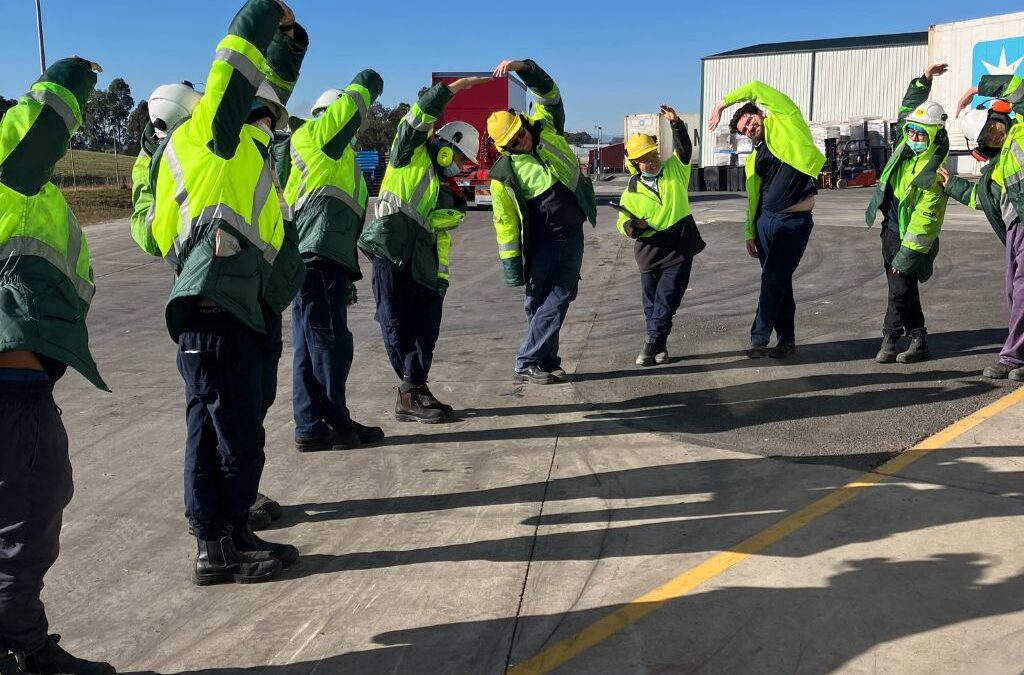
Group stretch facilitated by onsite health provider at Thomas Foods International
23 Workplace Activities for
Wondering how to get your organisation involved in National Safe Work Month? Here are some practical ideas to help you plan activities that suit your workplace and workforce.
Safe Work Australia’s theme for 2026 is “Safe work is for life.” The theme reflects that work health and safety isn’t just about preventing harm in the moment — it’s about protecting workers’ long-term health, wellbeing and future. It also underscores the business advantages of prioritising safety, showing how good workplace health & safety and risk management benefit individuals, organisations and the wider community.
1. Work health and safety fundamentals
1- Review PPE. Have supervisors and managers lead a safety inspection and review of PPE with their teams.
2- Recognise and reward. Recognise safety champions and role models. Provide awards for the safest department or team.
3- Safety posters. Place health and safety posters around the workplace and where workers congregate, like a tea room.
4- Movie time. Screen a safety or training video for workers. Check your state workcover authority website for webinars and videos for workers and leaders.
5- Multicultural. Include your culturally and linguistically diverse (CALD) workers in activities and accommodate language or cultural differences.
2. Psychosocial hazards
6- Promote your psychological health services. Invite your provider to talk to workers and supervisors about the services they can access onsite. If they cannot visit your workplace, arrange for an HR staff member to speak to workers about the provider.
7- Upskill managers. Enhance managers’ and supervisors’ skills and knowledge by providing professional development in psychosocial hazards and safety. Check the webinars, online resources and training available through your state’s WorkCover authority. You can also offer Mental Health First Aid training for staff, equipping them to support colleagues experiencing mental health issues.
8- Mindfulness sessions: Organise daily or weekly mindfulness or relaxation sessions, such as meditation or yoga, to help reduce stress and promote mental wellness.
9- Wellbeing check-ins: Implement regular wellbeing check-ins, where managers or wellbeing ambassadors can have one-on-one conversations with employees about their mental health and workload.
3. Risk management fundamentals
10- Hazard identification. Conduct a hazard identification session with workers. Encourage participation by running a team competition and offering prizes.
11- Consult. Schedule a SafeTea event or toolbox talk with workers and health and safety representatives to review risks and control measures.
12- Floor walks. Organise regular safety walks where leaders and your onsite health provider actively engage with workers on the floor, demonstrating their commitment to health and safety.
13- Legislation and compliance. Review the Model Code of Practice—How to Manage Work Health and Safety Risk from Safe Work Australia and Comcare’s Risk Management Snapshot
4. Musculoskeletal injuries
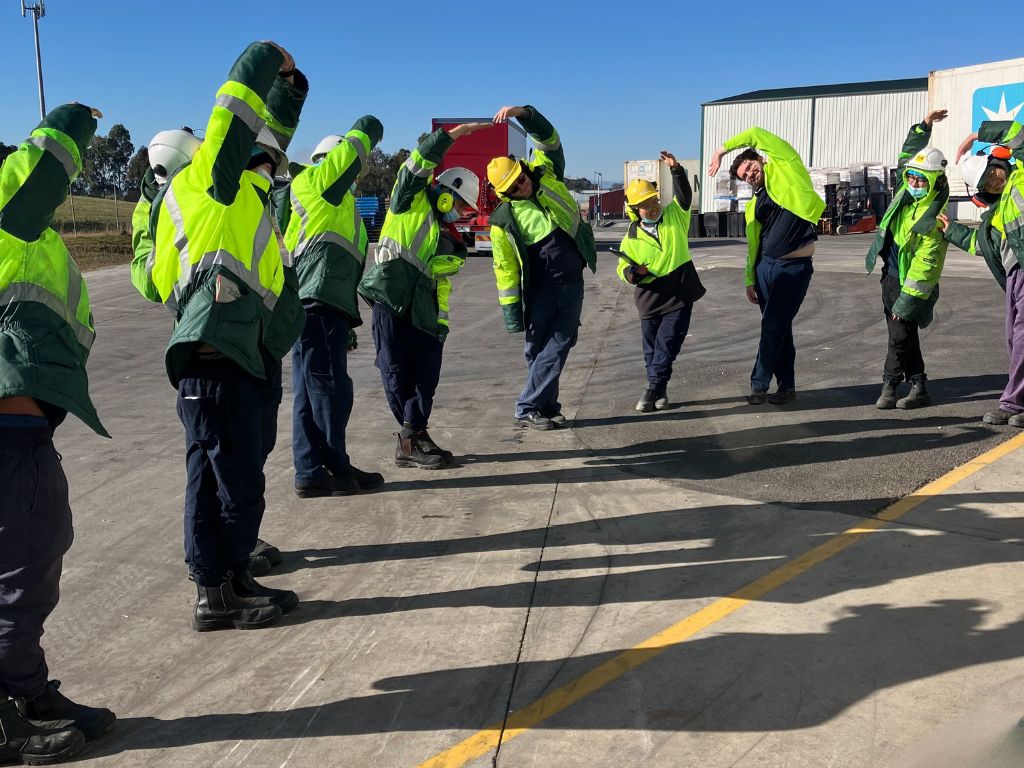
14- Group stretch. Offer a team or whole organisation warm-up or stretch session. Make it fun and engaging by asking workers to submit their preferred background music for the warm-up session.
15- Toolbox talks. Invite your onsite health provider to talk to workers about a healthy topic or musculoskeletal condition relevant to your workplace.
16- Ergonomics. Ask your onsite health provider to conduct ergonomic assessments to reduce the risk of musculoskeletal injuries
17- Manual handling: Organise workshops with your onsite health provider on safe manual handling techniques to prevent injuries.
Ongoing activities for the entire month
18- Safety poster campaign: Launch a poster campaign featuring key safety messages and tips, refreshed weekly to align with the themes of National Safe Work Month.
19- Daily safety messages: Send out daily safety tips or reminders via email or internal communications platforms, focusing on different aspects of workplace safety each week.
20- Safety ambassador program: Appoint safety ambassadors across various departments to champion health and safety initiatives, encouraging peer-to-peer engagement.
21- Collaborative safety workshops: Partner with other local businesses or industry groups to host joint safety workshops or seminars, leveraging collective expertise and resources.
22- Safety quizzes and challenges: Engage employees with weekly safety quizzes or challenges related to your industry, with small prizes for participation or correct answers.
23- Professional development: This month, invest in your and your team’s professional development. Safe Work Australia has a dedicated page for National Safe Work Month and resource hub to help you promote safety and support learning in your workplace throughout the month.
Ready to make the most of Safe Work Month?
Work Healthy Australia is running a range of activations throughout October — from musculoskeletal screening to mental health first aid training — to help your organisation put these ideas into action.